
What Is Myopia (Nearsightedness) in Children?
Myopia means your child can see clearly up close but has trouble seeing far away. Street signs, classroom boards, and sports can all look blurry.
Regular glasses or contacts can sharpen vision, but they do not stop the eye from continuing to grow longer. As the eye lengthens, the prescription increases, and the risk of certain eye diseases later in life goes up.
High myopia is associated with:
Retinal problems
Glaucoma
Early cataracts
Myopic maculopathy
That is why we focus not only on helping your child see clearly today, but also on protecting their eyes for the future.
What Is Myopia Management?
Traditional eye care corrects the blur.
Myopia management does more: it aims to slow down the progression of your child’s prescription over time.
At Lakeview
Eye Care, myopia management may include:
Specialized lenses designed to slow myopia progression
Possible specialty contact lens options (when appropriate)
Guidance on simple lifestyle habits that support healthy vision
Our goal is to give your child clear, comfortable vision now and reduce their risk for future eye problems.
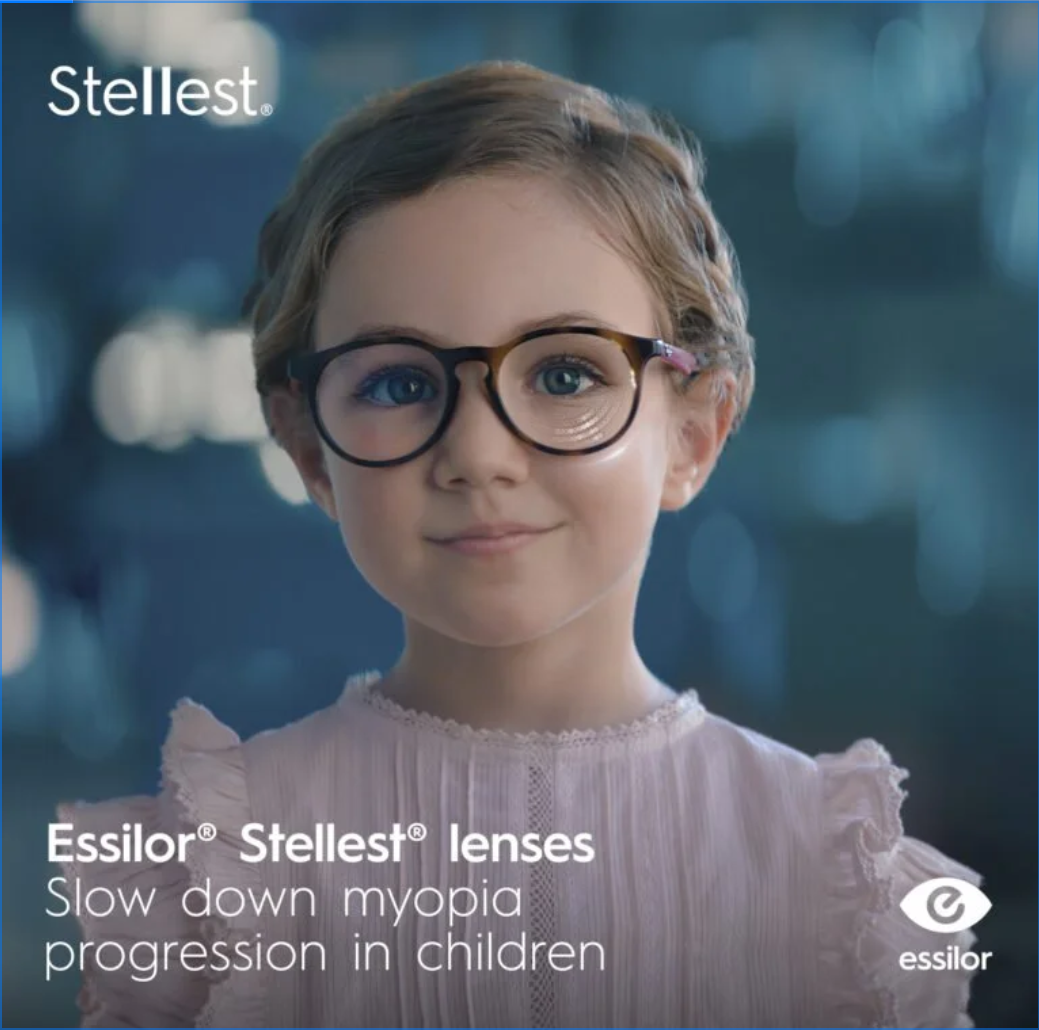
Stellest™ Lenses – A Simple, Powerful Option
One of the main tools we use is the Stellest lens.
Stellest lenses look like normal glasses on the outside, but inside the lens is advanced optical technology that has been clinically shown to slow myopia progression in many children.
Parents often appreciate Stellest lenses because they are:
✅ Easy to use – kids wear them like regular glasses
✅ Comfortable and familiar – no major change in routine
✅ Doctor-guided – part of a structured treatment plan
✅ Backed by strong clinical research
For many families, Stellest lenses are a calm, straightforward way to start myopia management.
Other Tools We May Use
Because every child is different, we may also discuss:
Specialty contact lenses designed for myopia control (when age and prescription make them a good choice)
Daytime or nighttime options, depending on your child’s needs and activities
Visual habits and lifestyle coaching, so the things your child does every day support their eyes instead of stressing them
We do not take a one-size-fits-all approach. Your child’s plan is tailored to their prescription, age, lifestyle, and your family’s preferences.
Habits That Help Protect Growing Eyes
No treatment works in isolation. Simple, steady habits at home can support your child’s eyes and enhance myopia management:
Follow the 20-20-20 rule: every 20 minutes of near work, look 20 feet away for 20 seconds
Increase outdoor time in safe daylight
Keep reading material and screens at a comfortable distance (not inches from the face)
Use good lighting for homework and reading
Over time, these small choices can quietly support better outcomes.
Signs Your Child May Need a Myopia Evaluation
You may want to schedule a myopia management evaluation at Lakeview Eye Care if your child:
Squints to see distant objects
Sits very close to the TV or holds screens/books close to their face
Complains of headaches or eye strain after reading or screen time
Needs stronger glasses nearly every year
Has one or more nearsighted parents
If any of these sound familiar, it is a good time to ask questions. That is exactly what this visit is for.
Schedule a Myopia Management Visit
If you are worried that your child’s nearsightedness is getting worse, now is the time to act.
Schedule a myopia management evaluation at Lakeview Eye Care:
📞 Call our Syracuse office
💻 Or request an appointment online
Your child has only one pair of eyes. With the right guidance, we can help protect their vision—today, for school and sports, and for the life that lies ahead.
Myopia Management for Kids at Lakeview Eye Care
Your child moves closer to the TV.
They squint at the board in class.
The tablet or book creeps closer and closer to their face.
These little habits can be early signs of myopia (nearsightedness). Myopia is very common, but today we know it is more than “just needing glasses.” At Lakeview Eye Care in Syracuse UT, we offer myopia management to help slow your child’s prescription from getting stronger year after year and to protect their long-term eye health.